
For general relaxation, every four to six weeks is a reasonable planning range for many people, but it is not a medical rule. Your best interval depends on why you are booking, the service and pressure you choose, how you feel after the session, your activity schedule, and what fits your budget.
Start with one session, notice your response, and adjust from there. If the experience feels useful and comfortable, you can test a shorter interval. If soreness lasts, the pressure felt too strong, or the schedule becomes stressful, wait longer or choose a gentler service next time.
If you are seeking massage for an injury, persistent pain, a health condition, pregnancy, or recovery after a procedure, ask a qualified healthcare professional whether massage is appropriate and how it should fit into your care. Massage should not replace medical evaluation or delay care for new or worsening symptoms.
What Is a Good Starting Schedule for Massage?
A good starting schedule matches the reason for your visit without locking you into more appointments than you need. For general wellness, begin with a single session or a four to six week interval, then change the timing only after you know how your body and routine respond.
Use the ranges below as planning prompts, not prescriptions. A qualified provider should still ask about your goal, preferred pressure, focus areas, sensitivities, and relevant safety information before suggesting another visit.

| Goal or situation | Practical starting point | Consider a shorter interval when | Wait longer or change the plan when |
|---|---|---|---|
| General relaxation | Every four to six weeks, or as wanted | The session feels comfortable and regular time supports your routine | The calendar or cost adds stress, or you do not feel a need to return yet |
| Recurring everyday tension | Every three to four weeks as a short test | Tension returns predictably and the prior session felt useful | Symptoms change, worsen, or need medical assessment |
| Active training period | Every two to four weeks based on workload | Your activity is temporarily heavier and the session does not disrupt training | Soreness lingers, performance feels affected, or an injury is suspected |
| Deep Tissue Massage | One session, then reassess after the response settles | Firm pressure was comfortable and a clear goal remains | Tenderness lasts, pressure felt excessive, or the same area is becoming more sensitive |
| Health condition, injury, pregnancy, or recent procedure | Healthcare-guided timing | A qualified healthcare professional and massage provider agree on the plan | New symptoms, unusual swelling, fever, skin changes, severe pain, or another safety concern appears |
The goal is not to find the most frequent schedule. It is to find the least frequent schedule that still feels worthwhile, comfortable, and realistic for you.
Start with the service, not a rigid calendar
Choose a pressure style that fits your goal, then use your response to decide when another visit makes sense.
Which Factors Should Change Your Massage Frequency?
Your goal, pressure preference, post-session response, activity, and budget should change the interval. The calendar matters less than what happened during and after the previous visit.
First, define the purpose in plain language. Wanting a quiet relaxation session is different from wanting focused work on an area that feels tight after long workdays.
Second, consider the service style. Swedish Massage uses lighter, flowing work for a relaxation-focused visit. Deep Tissue Massage uses firmer, more targeted pressure. A person may tolerate those services differently, so the same calendar interval may not suit both.
Third, use your response instead of a promise. Notice comfort during the session, tenderness afterward, how long the desired feeling lasts, and whether normal activity feels easy. Results and comfort responses vary. A schedule that worked last season may need to change when work, training, sleep, health, or stress changes.
Fourth, protect your budget. A sustainable visit is more useful than a schedule that creates financial pressure. You do not need a membership or package to decide. Shorten the interval only when the value is clear to you.
Does the Type of Massage Change How Often You Should Go?
Yes, the service style and pressure can change how much time you want between sessions. Lighter relaxation work may fit a regular wellness routine, while firmer or more focused work often deserves more attention to tenderness, activity, and recovery before rebooking.

Swedish Massage
Swedish Massage can fit a monthly or occasional relaxation routine because the pressure is generally lighter and adjusted to comfort. Start with every four to six weeks if you want a regular rhythm, or book only when you want time to relax. There is no requirement to return before you feel ready.
Deep Tissue Massage
For Deep Tissue Massage, wait until any expected tenderness has settled and you can judge the full response. Many people use a two to four week planning range, but weekly deep work should not be automatic. If firm pressure leaves you sore longer than expected, lengthen the interval, lower the pressure, or choose a different service.
Sports or Trigger Point Work
Sports or Trigger Point sessions should reflect the activity schedule and the area being addressed. During a temporary high-demand period, a person may choose shorter intervals. If pain is sharp, worsening, linked to an injury, or changing normal movement, stop treating the calendar as the answer and seek healthcare guidance.
Lymphatic Massage
Lymphatic Massage uses a different style and may be booked for wellness preferences or a health-related reason. If the reason involves swelling, surgery, lymphedema, cancer care, or another medical issue, the schedule belongs with the appropriate healthcare professional. Do not copy a frequency from a general wellness article.
If you are unsure which service fits, review the Massage Therapy options and describe your goal before booking.
How Can You Tell When It Is Time to Book Again?
Book again when the prior session felt appropriate, any temporary tenderness has settled, and the next visit still serves a clear goal. A simple response log is more useful than guessing or rebooking before you know what changed.
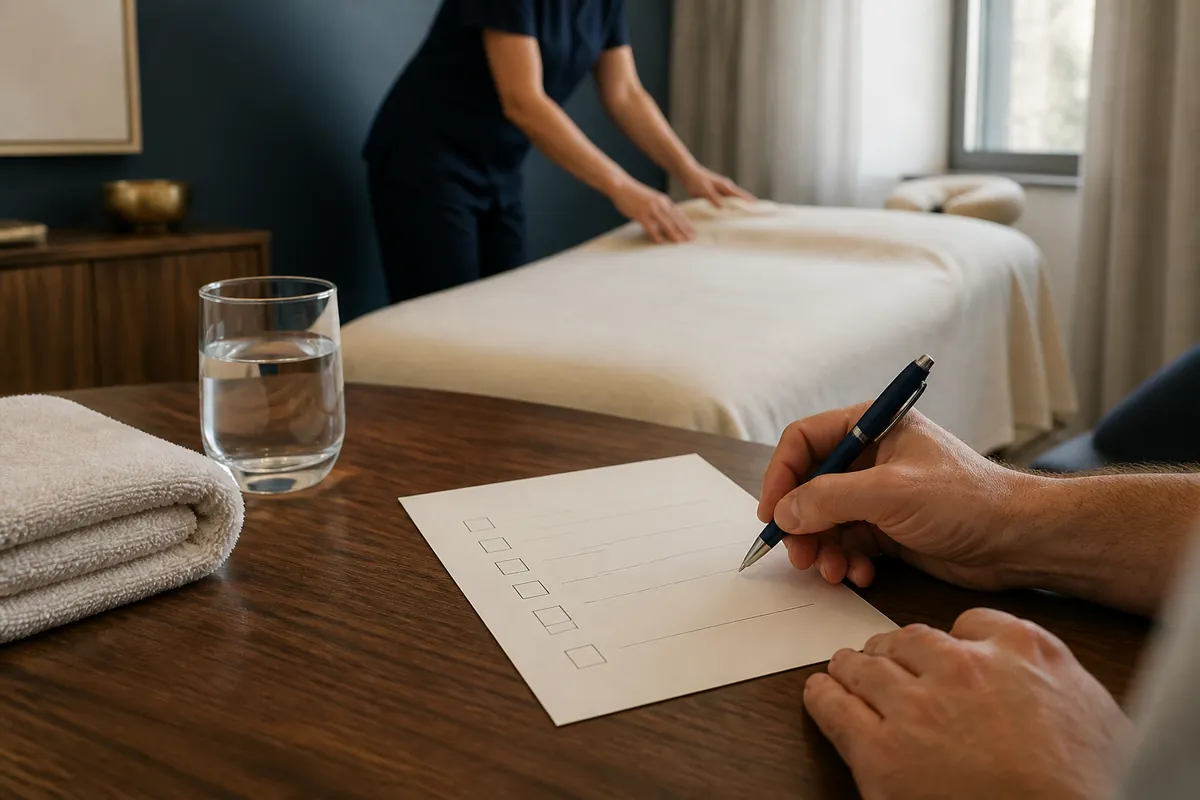
Use this five-step check after each visit:
- Record the service, session length, general pressure level, and main focus area.
- Note how comfortable the pressure and positioning felt during the session.
- Notice any tenderness, fatigue, or other response after the session and when it settled.
- Write down what felt useful and how long that experience remained noticeable in your normal routine.
- Before rebooking, keep the interval or change only one variable, such as pressure, service style, focus area, or timing.
This creates a two-visit learning cycle. The first visit gives you a baseline. The second tests one thoughtful adjustment. You can then keep, shorten, or lengthen the interval based on your experience.
Healing Hands Holistic Care begins sessions with a consultation about pressure preference, focus areas, allergies, sensitivities, and relevant safety information. In Texas, an initial massage consultation document is required, and it must be updated if the reason for seeking massage changes (TDLR, 2026). Tell the provider when your goal or health information changes, even if you have visited before.
Can You Get Massages Too Often?
Yes, massage can be too frequent when your body has not settled from the last session, pressure is repeatedly uncomfortable, symptoms are worsening, or appointments are replacing medical care. More sessions are not automatically better.
The National Center for Complementary and Integrative Health reports that massage generally has a low risk of harmful effects when performed appropriately, but rare serious events have been reported. Some involved vigorous techniques or people with greater injury risk. NCCIH also advises people not to use massage to postpone seeing a healthcare provider about a medical problem (NCCIH, 2026).
Pause and seek appropriate guidance if you have severe or increasing pain, unusual swelling, numbness, weakness, fever, skin infection, unexplained bruising, shortness of breath, or symptoms after an injury or procedure. This is not a complete screening list. A qualified healthcare professional can assess whether massage is appropriate.
Frequent appointments can also be a poor fit without a medical concern. If the pressure must be reduced every time because tenderness remains, or you are booking because of sales pressure rather than a clear preference, extend the interval. A good plan respects your comfort, consent, time, and budget.
What Does Research Say About Massage Frequency?
Research does not provide one schedule for every massage client. Studies test specific visit lengths and frequencies in defined groups, so their results should not be turned into a universal weekly or monthly rule.
One randomized trial assigned 228 adults with chronic nonspecific neck pain to different massage lengths and frequencies for four weeks. Sixty-minute sessions two or three times per week produced greater short-term improvement than a wait-list comparison, while the 30-minute schedules did not show the same result (Sherman et al., 2014). This was a clinical trial for chronic neck pain, not evidence that a general wellness client needs several massages each week.
A follow-up trial examined longer-term outcomes and an extra set of six weekly sessions. Some booster effects appeared at 12 weeks, but they were not significant at 26 weeks (Cook et al., 2015). That pattern supports reassessment. It does not support an endless fixed schedule.
NCCIH summarizes the broader evidence as mixed, condition-specific, and often short term. For low-back pain, reviews found weak or low-quality evidence. For neck and shoulder pain, some short-term benefit may occur when sessions are long enough and frequent enough, but the best schedule still depends on the condition and study design (NCCIH, 2026).
For a wellness client in Cedar Hill, use research to understand limits, consultation to choose the service, and your response to adjust the interval. For a medical goal, involve the healthcare professional who understands your condition.
Frequently Asked Questions
A weekly massage may fit some people, but it is not necessary for everyone and should not be treated as a universal health rule. Weekly visits make more sense when the pressure is comfortable, the reason is clear, the person recovers well, and the cost and time are sustainable. If tenderness persists, symptoms change, or the schedule relates to an injury or health condition, wait and ask a qualified healthcare professional for guidance.
Two massages in one week may be too much for a general wellness client, especially when both sessions use firm pressure on the same area. Condition-specific research has tested more frequent schedules, but those trials do not apply automatically to everyday relaxation. Consider the service style, the areas addressed, your response, and any medical context. Do not book the second session simply because more seems better.
Wait until any post-session tenderness has settled and you can judge how the prior Deep Tissue Massage affected your normal routine. A two to four week planning range works for many wellness schedules, but the right interval may be longer or shorter. If soreness lasts longer than expected, pressure felt painful, or the same area is becoming more sensitive, extend the interval and discuss a gentler approach.
Active people can start with every two to four weeks during a demanding period, then adjust around training load and their response. This is a planning range, not an injury treatment schedule. Avoid assuming that firm work immediately before or after every workout improves performance or prevents injury. If activity causes sharp pain, swelling, weakness, or altered movement, seek appropriate healthcare guidance before booking focused massage.
Monthly massage is an option, not an obligation. A four to six week rhythm can make planning easy, while occasional booking may fit someone who prefers flexibility. Choose the interval that feels useful and affordable. If you stop noticing value, change the service, pressure, or timing instead of automatically adding more appointments.
Healing Hands Holistic Care provides personalized massage options at 610 Uptown Blvd, Suite 4200, Cedar Hill, TX 75104. Review the service styles first, then book a visit that matches your pressure preference and goal. Use the response framework after the session before choosing the next interval. You can also contact the practice if you are unsure which nonmedical wellness option fits your preferences.
Ready to Choose a Schedule That Fits You?
Start with the service, not a rigid calendar. Choose a massage style that matches your pressure preference, notice how you respond, and schedule the next visit only when it supports a clear goal and fits your routine.
Massage is a wellness service and is not a substitute for medical evaluation, diagnosis, or treatment. If you have a health condition, pregnancy, recent procedure, injury, persistent pain, or new symptoms, ask a qualified healthcare professional whether massage is appropriate and how often it should be used.
References
- National Center for Complementary and Integrative Health. Massage Therapy: What You Need To Know. Accessed August 14, 2026.
- Sherman KJ, Cook AJ, Wellman RD, et al. Five-week outcomes from a dosing trial of therapeutic massage for chronic neck pain. Annals of Family Medicine. 2014;12(2):112-120. PMID: 24615306.
- Cook AJ, Wellman RD, Cherkin DC, Kahn JR, Sherman KJ. Randomized clinical trial assessing whether additional massage treatments for chronic neck pain improve 12- and 26-week outcomes. Spine Journal. 2015;15(10):2206-2215. PMID: 26096474.
- Texas Department of Licensing and Regulation. Massage Therapy Session Consultation. Accessed August 14, 2026.
- Texas Department of Licensing and Regulation. Commission Readopts Massage Therapy Rules. March 13, 2026.