

Mild tenderness that steadily improves can happen after a massage, especially after unfamiliar or firm pressure. It should not be treated as proof that toxins left your body, that muscles were damaged in a helpful way, or that the session worked better.
The direction of the symptoms matters more than a rigid clock. Mild sensitivity that eases is different from pain that is severe, worsening, spreading, or paired with swelling, numbness, weakness, fever, trouble breathing, or loss of normal movement. Those symptoms need healthcare guidance, not another massage.
If the tenderness is mild, pause strenuous activity if it feels uncomfortable, keep movement gentle, hydrate normally, and note what you feel. Tell the massage practice how the pressure affected you before your next session. You may prefer less pressure, a shorter focus on the sensitive area, or a gentler service.
Is It Normal to Be Sore After a Massage?
Some people notice temporary tenderness after massage, but soreness is not required and there is no single normal intensity or duration for everyone. The pressure used, the area worked, your sensitivity, your health context, and whether that style of bodywork is familiar can all shape how you feel afterward.
A randomized trial involving 767 adults found that muscle soreness, increased pain, and stiffness were the most commonly reported events after manual therapy (Paanalahti et al., 2014). The treatments combined massage with other manual techniques, so the study does not provide a massage-only soreness rate. It does show why a careful response is better than assuming every ache is harmless.
Use the three-level guide below as a decision aid, not a diagnosis.

| What you notice | Sensible next step | Who to contact |
|---|---|---|
| Mild, localized tenderness that is steadily easing and does not limit normal activity | Observe it, use gentle movement, reduce strenuous activity if uncomfortable, and record how long it lasts | Tell the massage practice before the next session so pressure can be adjusted |
| Soreness that is not improving, lasts several days, feels unusual, or makes you uncertain | Stop aggressive self-treatment and ask for individualized guidance | Contact a qualified healthcare professional, and tell the massage practice what happened |
| Severe or rapidly worsening pain, marked swelling or bruising, new numbness or weakness, loss of function, fever, chest pain, trouble breathing, fainting, or dark urine with severe muscle symptoms | Seek prompt or urgent medical assessment | Use urgent or emergency care based on the severity of the symptoms |
This list is not complete. If something feels seriously wrong, do not wait for a blog article or another appointment to decide for you.
Why Can Muscles Feel Tender After Massage?
Post-massage tenderness may reflect how your body responded to pressure and tissue loading, but research has not established one universal mechanism. Firm work on a sensitive area can feel different afterward than light, relaxation-focused touch, and a first session may feel different from a familiar routine.
Several factors can matter:
- The pressure may have been stronger than your comfortable range.
- One area may have received more focused work than the surrounding tissue.
- You may already have been sensitive from activity, prolonged positioning, an injury, or another cause.
- Your preferred pressure may have changed since a previous session.
- A health condition, medication, recent procedure, or tendency to bruise may change the safety picture.
None of these points proves a diagnosis. They are reasons to describe what happened clearly and to avoid repeating the same pressure automatically.
At Healing Hands Holistic Care, each session begins with a consultation about pressure preference, focus areas, allergies, sensitivities, and relevant safety information. Speak up during the session if pressure changes from productive to painful. In Texas, a client may ask the massage therapist to stop the session if the client becomes uncomfortable for any reason (TDLR, 2022).
Does Massage Release Toxins or Lactic Acid?
Massage soreness should not be explained as toxins leaving the body. The phrase sounds scientific, but it does not identify a measured substance, a tested process, or a reason that pain should be expected.
A small study of 10 male athletes compared active recovery, short-term massage, and passive sitting after intense exercise. Massage did not improve blood lactate removal compared with passive rest (Gupta et al., 1996). Exercise recovery is not the same question as ordinary post-massage tenderness, but the finding does not support the familiar claim that massage flushes lactic acid from tissue.
Drink according to your normal needs unless a healthcare professional has given you different instructions. Water supports ordinary hydration. It should not be sold as a way to wash massage toxins out of the body.
How Long Should Soreness Last After a Massage?
Mild tenderness should show a clear trend toward improvement, often over the next day or two, but no research-backed deadline fits every person. Exact promises such as 24, 48, or 72 hours can sound reassuring while hiding important differences in intensity, function, medical history, and symptom direction.
Use time as one part of the decision:
- During the first day, notice whether the area feels mildly tender or whether pain is sharp, severe, or limiting normal movement.
- Over the next day or two, look for steady improvement rather than a precise hour count.
- If symptoms are not improving, last several days, or feel more intense than expected, contact a qualified healthcare professional.
- If symptoms worsen quickly or include neurologic, breathing, circulation, or systemic warning signs, seek prompt care.
Do not schedule another firm session just to work through unresolved soreness. Let the response settle and understand what happened first.
What Can You Do for Mild Post-Massage Tenderness?
For mild tenderness that is improving and has no warning signs, choose low-risk comfort measures and avoid trying to force a faster recovery. The goal is to observe the trend and prevent more irritation.
- Record the response. Note the location, intensity, start time, pressure used, and whether normal activity is affected. This gives the practice and any healthcare professional clearer information.
- Reduce strenuous activity if it feels uncomfortable. You do not need complete bed rest, but this is not the time to prove you can push through pain.
- Use gentle movement within comfort. An easy walk or normal daily movement may feel better than staying rigid. Stop if movement clearly worsens the symptoms.
- Hydrate normally. Follow your usual hydration needs or medical instructions. Do not force large amounts of water to chase an unproven detox effect.
- Avoid aggressive self-treatment. Do not dig into the sore area with another deep massage, a hard massage gun, or forceful stretching. Ask a healthcare professional or pharmacist before using medication or a treatment that may not be safe with your health history.
A warm shower may feel comfortable for some people. If there is marked swelling, a recent injury or procedure, altered sensation, a circulation concern, or uncertainty about heat or cold, ask a healthcare professional instead of guessing.
When Should You Contact the Massage Practice or Seek Medical Care?
Contact the massage practice when mild symptoms are improving but you want to discuss the pressure, technique, or plan for a future visit. Contact a healthcare professional when symptoms are severe, worsening, persistent, unusual, or associated with changes in strength, sensation, swelling, bruising, skin, fever, breathing, or normal function.
The National Center for Complementary and Integrative Health states that massage appears to have a low risk of harmful effects when performed appropriately. It also records rare reports of serious problems such as blood clot, nerve injury, and bone fracture, sometimes after vigorous techniques or in people with greater injury risk (NCCIH, 2026).
A systematic review found 138 adverse events across 40 published reports from an 11-year period (Yin et al., 2014). The reports included soft tissue trauma and neurologic complications. This kind of evidence cannot calculate the risk for an average client, but it supports taking unusual symptoms seriously.
Contact Healing Hands When
- The tenderness is mild and improving, but you want the pressure noted for your next visit.
- One area felt more intense than expected during the session.
- You want to compare a lighter Swedish session with firmer Deep Tissue work.
- Your reason for seeking massage or relevant health information has changed.
Contact a Healthcare Professional When
- Pain is severe, worsening, spreading, or not improving.
- Soreness lasts several days or limits normal movement.
- You notice marked swelling, unexplained bruising, redness, fever, or skin changes.
- You develop numbness, tingling, weakness, or loss of function.
- Symptoms follow an injury, medical procedure, pregnancy-related concern, or important health change.
Seek urgent care for chest pain, trouble breathing, fainting, severe or rapidly increasing symptoms, or another emergency concern. Massage should not delay medical evaluation.

Need to discuss pressure before your next visit?
If your last session felt firmer than you wanted, let our team know so we can customize your next appointment.
How Should You Change Your Next Massage?
Your next session should change if the previous pressure left you more tender than you wanted. Soreness is useful feedback, not a target and not a test of toughness.
Before rebooking, write down four details: the service, the area worked, the pressure that felt uncomfortable, and how long the response lasted. Share those details during the next consultation. Ask the therapist to start lighter, check in earlier, spend less time on the sensitive area, or avoid it.
Deep Tissue Massage uses firmer, focused pressure, but the pressure should still be adjusted to your comfort. If you want a calmer session after a strong response, Swedish Massage uses lighter, flowing strokes for a relaxation-focused visit.
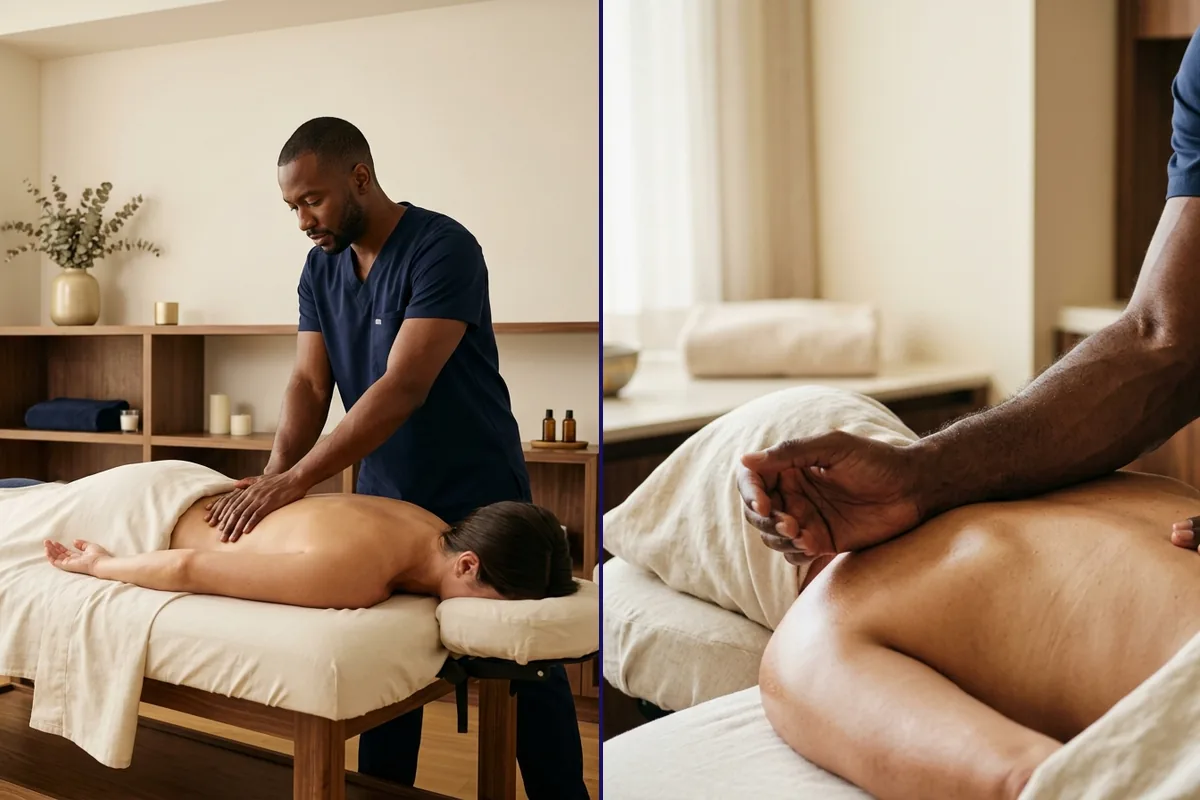
You can also choose a personalized session through the Massage Therapy options page. The best choice is not the deepest pressure you can tolerate. It is the service and pressure that match your goal without creating an unwanted response.
Texas consultation rules require an initial consultation document before the first massage session and an updated document when the reason for seeking massage or required consultation information changes (TDLR, 2022). Tell the practice about relevant changes even if you have visited before.
Frequently Asked Questions
Mild tenderness the next day can happen, especially after unfamiliar or firm pressure, but it should be improving rather than escalating. Check the intensity, whether the area is localized, and whether normal movement is easy. Severe pain, rapid worsening, marked swelling or bruising, numbness, weakness, fever, or other unusual symptoms should be assessed by a qualified healthcare professional.
No, soreness does not prove that a massage worked. A comfortable session can still meet a relaxation or service goal, and painful pressure is not a quality measure. Judge the visit by whether the pressure respected your preferences, the session matched your goal, and the response felt acceptable. If soreness was unwanted, use it to request a different pressure or service next time.
For mild improving tenderness, reduce strenuous activity if it feels uncomfortable, use gentle movement within comfort, hydrate normally, and avoid forceful stretching or aggressive self-massage. Record what you feel and watch the direction of the symptoms. Ask a healthcare professional before using medication, heat, cold, or another treatment when your health history makes the choice uncertain.
Deep Tissue Massage uses firmer and more focused pressure, so pressure response deserves extra attention. The service should not require you to endure sharp or intense pain. If you felt more tender than expected, wait until the response settles, tell the practice what happened, and ask for lighter pressure, less time on the area, or a gentler Swedish Massage session.
No evidence shows that extra water removes special toxins released by massage. Drink according to your normal needs or medical instructions, but do not force water as a detox treatment. Research on exercise recovery has not shown short-term massage to improve blood lactate removal over passive rest, and that evidence does not support a lactic-acid flushing claim.
Contact Healing Hands Holistic Care at 469-415-4476 when mild symptoms are improving and you want to discuss the session, pressure, or a future adjustment. The practice is located at 610 Uptown Blvd, Suite 4200, Cedar Hill, TX 75104. For severe, worsening, persistent, neurologic, systemic, or otherwise concerning symptoms, contact a qualified healthcare professional instead of relying on massage advice.
Choose Pressure That Fits Your Next Session
You do not need to repeat the same pressure after an uncomfortable response. Tell Healing Hands what you noticed, ask about a lighter approach, or compare Swedish and Deep Tissue options before scheduling again.
Massage is a wellness service and is not a substitute for medical evaluation, diagnosis, or treatment. This page provides general information and cannot determine the cause of pain or other symptoms. Seek appropriate healthcare guidance for severe, worsening, persistent, unusual, or emergency symptoms.
References
- National Center for Complementary and Integrative Health. Massage Therapy: What You Need To Know. Accessed August 23, 2026.
- Paanalahti K, Holm LW, Nordin M, et al. Adverse events after manual therapy among patients seeking care for neck and/or back pain: a randomized controlled trial. BMC Musculoskeletal Disorders. 2014;15:77. PMID: 24618345.
- Yin P, Gao N, Wu J, et al. Adverse events of massage therapy in pain-related conditions: a systematic review. Evidence-Based Complementary and Alternative Medicine. 2014;2014:480956. PMID: 25197310.
- Gupta S, Goswami A, Sadhukhan AK, Mathur DN. Comparative study of lactate removal in short term massage of extremities, active recovery and a passive recovery period after supramaximal exercise sessions. International Journal of Sports Medicine. 1996;17(2):106-110. PMID: 8833711.
- Texas Department of Licensing and Regulation. Massage Therapy Session Consultation. Revised May 2022. Accessed August 23, 2026.